
For as long as I can remember, I’ve resisted the idea that success requires self-abandonment.
Long before I had language for authenticity, belonging, psychological safety, or inclusive leadership, I simply knew when something didn’t feel right.
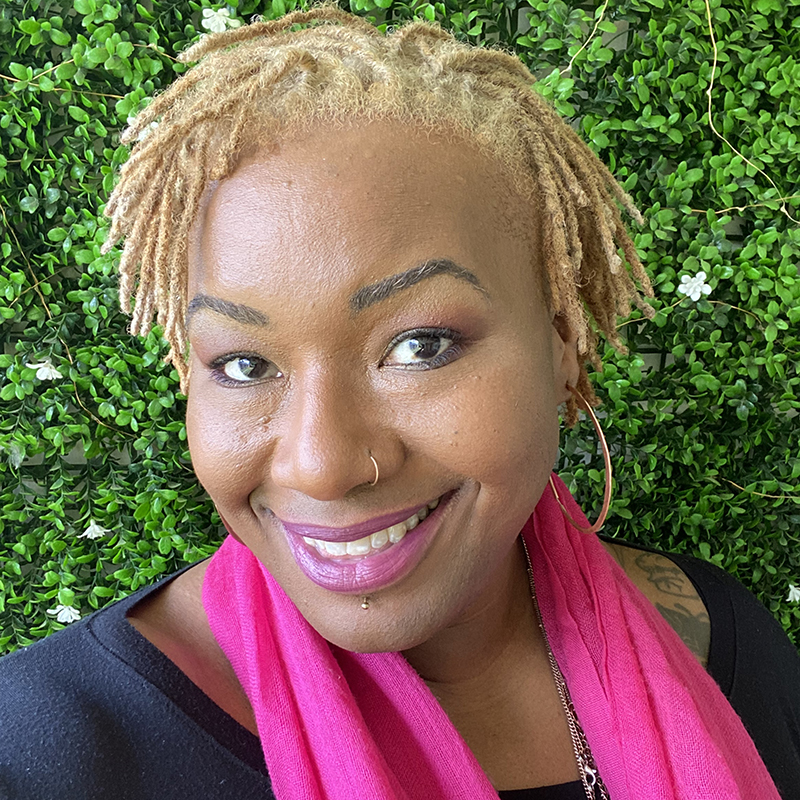
Early in my career, I remember making a conscious decision to interview for jobs wearing twists in my hair.
At the time, that wasn’t the norm.
The expectation was polished. Straight. Conservative. “Professional”.
I remember thinking, If I have to stop looking like myself to get the job, then maybe it isn’t my job.
That felt so risky in the 90s and yet, it felt right to me.
Looking back, I realize it was one of the earliest expressions of what would eventually become my life’s work, The SHIFT Method.
I wasn’t rejecting leadership or management. It was my dream to lead work that made a difference in the world.
I was rejecting the idea that in order to be a successful leader, I had to become someone else.
Eventually, that conviction led me away from corporate America and into the nonprofit sector; not because nonprofit work was easier. It wasn’t. It was because at the time, I found a culture that felt more aligned with who I was and how I wanted to lead.
Still, I found myself asking a different question.
Could I make an impact without losing myself in the process?
In the nonprofit sector, the challenges were different, but they were no less real. Governance structures meant decision-making and resources were often in the hands of others. The work was deeply meaningful, but it could also be unrelenting, political, competitive, and exhausting. Even in mission-driven spaces, I found myself navigating power dynamics, climbing ladders, and occasionally experiencing the “crab in the bucket” mentality that so many women know all too well.
Still, I refused to believe my dream and my joy had to be mutually exclusive.
I wasn’t looking for an easier career.
I was looking for a way to lead without abandoning myself.
Over the years, I realized the question wasn’t whether corporate or nonprofit was better. Every system has its own pressures. The real question became:
How do I make meaningful impact within the system without losing myself in the process?
That question became one of the driving forces behind my work.
Nearly fifteen years ago, I started using a simple phrase that many of you have probably heard me say over and over again.
#ItBringsMeJoy.

At first, it sounded almost playful.
But it wasn’t.
It was a declaration.
A commitment to stop treating joy like something I had to earn after the work was finished.
A reminder that joy wasn’t the reward.
It was part of the work itself.
As I transitioned into coaching and consulting, I discovered I wasn’t alone. Again and again, women executives shared remarkably similar experiences. They were accomplished, respected, and deeply committed to their organizations, yet somewhere along the way they had become disconnected from themselves while trying to survive systems that constantly asked them to accommodate, perform, or prove their worth.
Last week, I attended a pre-screening of Skylark, a documentary film loosely based on White Women Cry and Call Me Angry, Dr. Yannique Redwood’s memoir on the harms Black women experience in the workplace and the radical work required to move toward healing.

One of the concepts explored throughout the evening was weathering—the cumulative impact of constantly adapting yourself to survive systems that were never designed with you in mind.
Dr. Redwood spoke about a Care Revolution.
Her words stayed with me because they reminded me that caring for ourselves isn’t separate from the work.
It sustains the work.
Another place I’d encountered this idea was in Burnout by Emily and Amelia Nagoski. They describe the importance of completing the stress cycle—recognizing that stress doesn’t simply disappear because the meeting ends, the deadline passes, or the email gets answered. Our bodies need opportunities to process what we’ve experienced and return to a place of safety.
That idea has stayed with me for years.
It’s one of the reasons I introduced breathwork into my executive coaching practice. It’s why I incorporate somatic practices into the leadership retreats and group facilitation experiences I design. The leaders I work with aren’t simply thinking through difficult challenges; they’re carrying them in their bodies. If we want people to lead well, we have to create opportunities for them to release what they’ve been carrying—not just intellectually, but physically and emotionally as well.
That’s why, after the screening, I sat down and created a Pleasure List.
Not because I needed another exercise.
Because I needed a practice.
A practice that reminds me, on an ordinary Tuesday, that my body deserves moments of safety and joy too.
I made a list of simple things that bring me joy.
Fresh flowers.
A cool breeze.
Good conversation.
Good music.
Trying new restaurants.
Fresh Melon
Freeze pops.
A tub of movie popcorn with way too much fake butter.
Rubbing my feet across my fluffy rug because I don’t do bugs.
Then I decided to take it one step further.
I’m writing each item on a small slip of paper, folding them up, and placing them in a jar. On the days when I can feel the weight of the work accumulating, I’ll pull one out and give myself permission to do it.
Not because the work is finished.
Because the work continues.
And so must I.
Joy is resistance.
Tending to ourselves is not indulgence.
It’s preparation.
It’s preservation.
In a world that so often rewards depletion, choosing joy is one way we refuse to lose ourselves while we work to change the systems around us.
What’s on your list?